Hadhramaut region in southeastern Yemen suffers from critical challenges resulting from ongoing conflicts and economic deterioration, including the devaluation of the local currency and poor environmental conditions. The districts of AlQatn, Seiyun, Shibam, Wadi Al Ayn, Doan, and Rakhyah are particularly affected, which has had a direct impact on the people living in these areas.
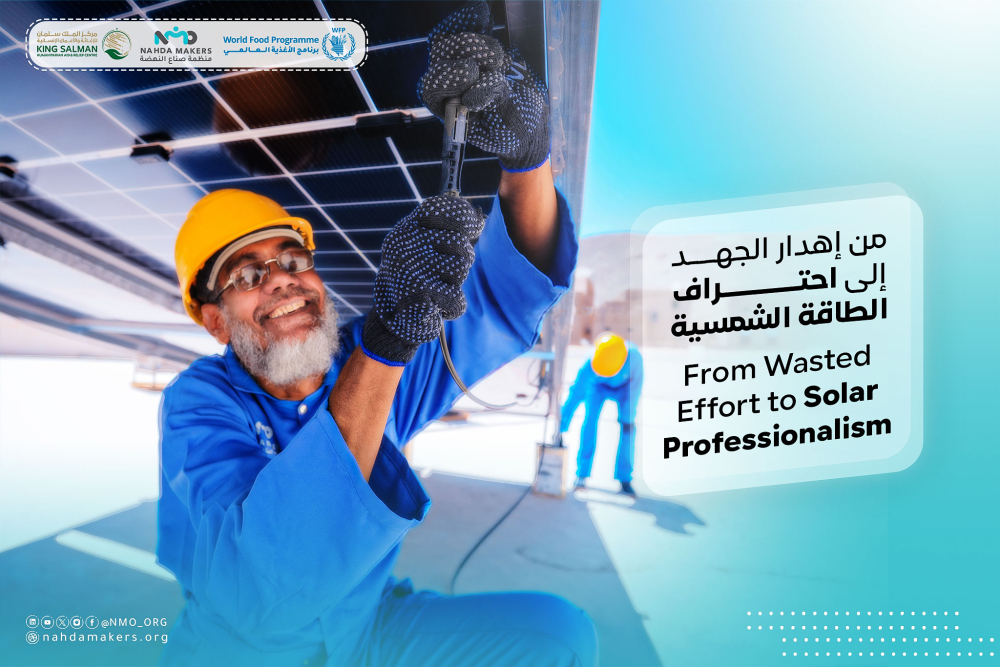
From Wasted Effort to Solar Professionalism: How to Become a Leader in the Profession of the Future?
In Al-Hazm area of Shibam district, Mahrous Rabih Awad Muqaram, a 60-year-old breadwinner of six, lived a life of effort and search. Despite his attempts to acquire knowledge in the field of electricity and solar energy online, his struggle was wasting a lot of time and effort in seeking financial income to provide for his family. He needed an organized work framework and a profession that would generate a sustainable income with minimal effort.
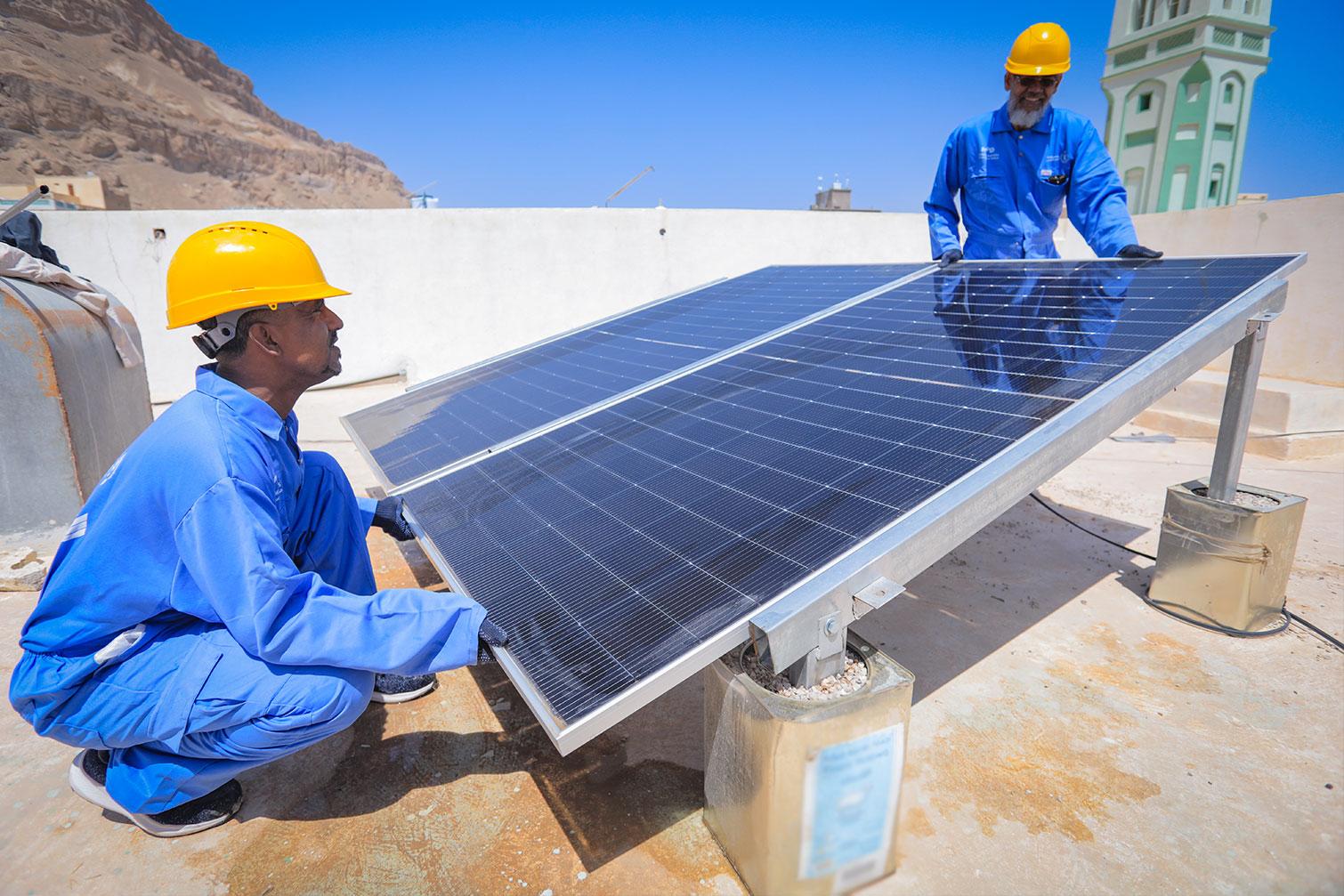
Amid these circumstances, the "From Food to Resilience” project came through vocational training in the field of electricity and solar energy, which was implemented by Nahda Makers Organization in partnership with the World Food Program and funded by King Salman Humanitarian Aid and Relief Center. This intervention marked a decisive turning point in Mahrous's life, providing him with guidance, mentorship, practical knowledge through training and practical application, as well as professional tools through the empowerment kit that help him develop his own business.
Mahrous says with a smile and reassurance:
"Without a doubt, our situation improved better after the intervention to guide and guide us to what is beneficial to us towards hope... Through this profession and its demand in the labor market, it has been the cause of increasing income with less fatigue and effort."
The impact of the project did not stop at the financial aspect only, as Mahrous gained knowledge in the field of installation and maintenance of solar energy systems, which gave him a practical and professional ability that qualifies him to engage in the labor market with confidence. Thus, the impact became evident in improving his standard of living and economic stability, in addition to his contribution to spreading the culture of using renewable energy among his local community through his work and daily experiences.
At the end of his story, Mahrous did not forget to thank the implementing and funding agencies, saying:
"We thank Nahda Makers Organization, the World Food Programme (WFP) and the supporter of King Salman Relief Center for this opportunity to improve our sources of income, and we urge them to continue such projects."
The story of Mahrous Rabee Maqram stands as a living testament that development initiatives based on vocational training in future-oriented fields have the power to transform exhaustion and hard work into productive efficiency and professional stability, helping individuals move from hardship and need to hope and empowerment.