For the community of Ajwa sub-district, Al Azariq district, jerry cans are everywhere carried by hand or piled high on donkeys. Whatever the method, the goal is the same: water. Access to safe water was an ongoing problem.
People suffered to find clean drinking water, community members had to walk for hours under a blazing sun just to get water. This due to the shortage of water sources, which are at the same time, unprotected wells. In addition, people have to pay a lot of money if they need to use these sources.
This requires emergency interventions to support the most vulnerable households that cannot afford buying the water or the needed tools to purify the water. An immediate rehabilitation of the only well water source was crucial for community Ajwa .
“For many years, the main well was not functional and people suffered a lot. The main water reservoir was demolished. Water of the main well is contaminated so we suffered from diarrhoea since this well is opened and unprotected
“.Ali Mohammed, 50-years-old reported. “my neighbours and I did not have access to safe and sustainable water in the village”. Nahdah makers team met with Ali Mohamed who is married and a father of 4 sons and 7 daughters. “Lack of food is difficult but lack of water is a whole other disaster. We need water for everything. How can a family of 11 survive without water?” Ali added.
In Ajwa, water shortage has forced people to resort to using unclean water that has led to the outbreak of waterborne diseases such as diarrhoea and Cholera. The lack of clean drinking water has left many people, like Ali’s family, in a hard tragic situation.
“Water had become scarce and expensive. We couldn't afford enough water for the family, what we could buy or borrow was barely enough for drinking”. “How can I send my children to school while they don’t have drinking water “Mohamed asked?
“Now fetching water takes much less time, and they can devote more time to other activities. Furthermore, the diseases from drinking unsafe water, which often caused stomachaches and diarrhea, have decreased.” it takes minutes for my children to bring water from the new constructed water point that is located near to the well”. Ali said
“I am very grateful for the clean water we are provided with. My children now do not have to miss school to fetch water.”Ali concluded.
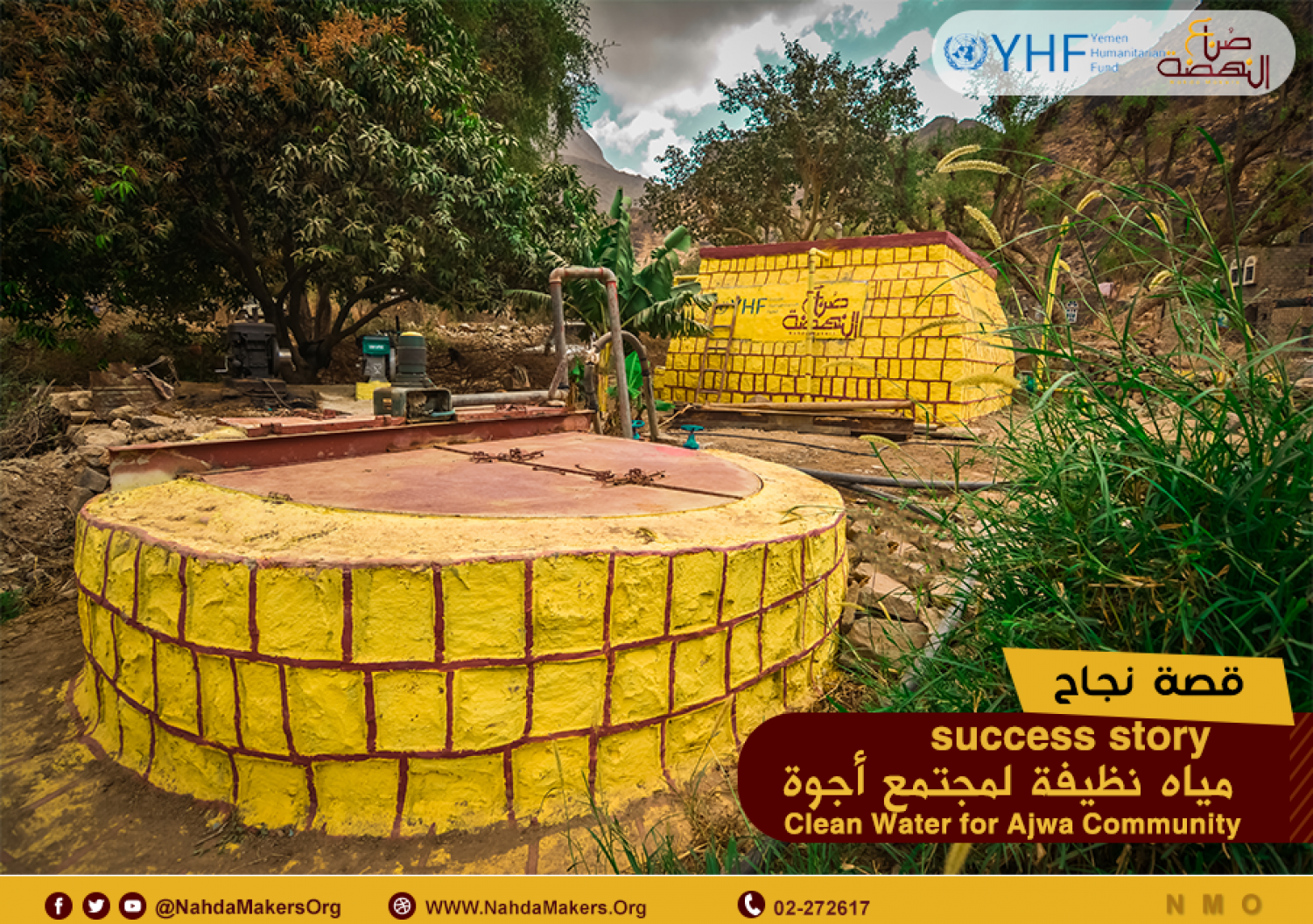
Nahda Makers Organization (NMO) as part of integrated WASH and Food Security Support to the most vulnerable host communities in Al Azarik district, Al Dale’e governorate with funding from the Yemen Humanitarian Fund (YHF) intervened to rehabilitate the water sources in order to restore community water sources.
NMO constructed new stone reservoir, rehabilitated the main well, and water distribution point is constructed. Within the scope of the project, a workshop was conducted water community committees and all members were trained on how to manage, operate and maintain their water supply scheme.
A total number of 2938 are now benefiting from the project.