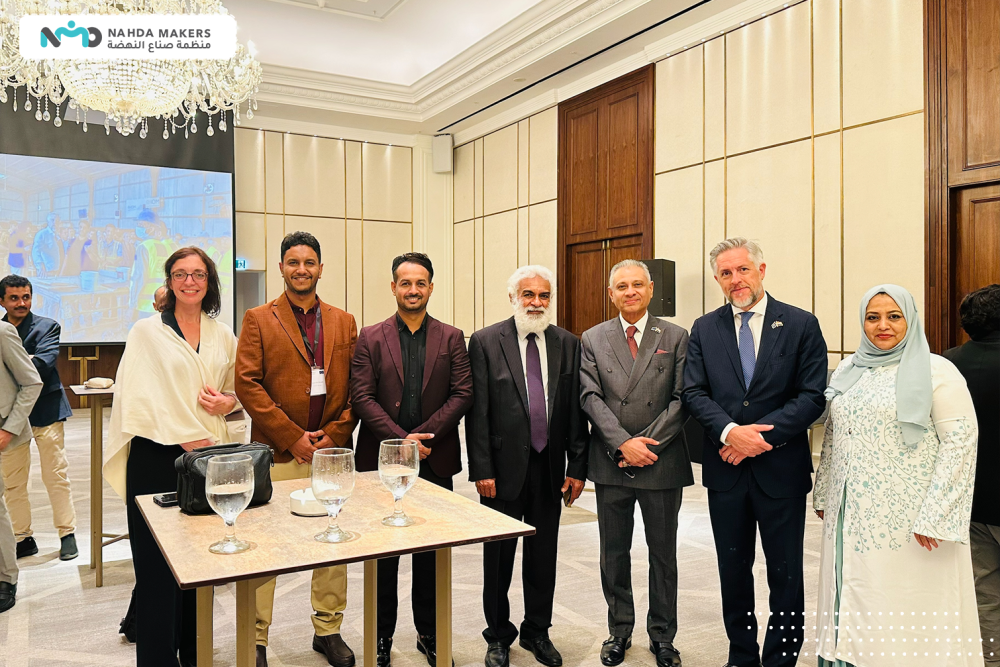
The European Union and its implementing partners concluded two days of discussions in Amman on Tuesday, reviewing EU-Yemen cooperation and the priorities guiding programmes across the country. The event was attended by Nahda Makers Organization, represented by MEAL Manager: Nasser Saleh Abdo and Protection Manager: Yasser Bin Shuaib.
The fourth edition of the “EU-Yemen Partnership Days,” held on 28 and 29 September 2026, brought together organizations implementing EU-funded programmes, European institutions, as well as other development actors working across the humanitarian, development, and economic sectors throughout the country.
The event was opened by the European Union Ambassador to Yemen, Patrick Simonnet, and Yemen’s Minister of Planning and International Cooperation, H.E. Dr. Mohammed Al-Faqmi, followed by a plenary session on EU-Yemen cooperation.
Ambassador Simonnet said: “We are meeting today with our partners and stakeholders to identify shared priorities and explore innovative and practical ways to respond to needs. By sharing experiences and coordinating our efforts, we can make our support more effective. Our commitment is not limited to addressing immediate needs; it also includes helping Yemenis rebuild their livelihoods, access reliable services, and shape their own future.”
The discussions covered agriculture and food systems, investment, livelihoods and job creation, gender, media, water management, climate pressures, and the role of the private sector. They also addressed political participation and support for mediation efforts, communication, donor coordination, and lessons learned from recent project assessment processes.
The economic landscape featured prominently in the discussions, with a dedicated session on expanding investment that brought together development finance institutions, representatives of the European Union, and private-sector representatives. A dedicated business dialogue was also held, focusing on strengthening engagement between European and Yemeni economic actors.
Water management was another key topic. Sessions explored donor coordination in addressing the groundwater crisis amid increasing climate pressures, while also examining water management through the lens of culture, traditional knowledge, and science-based innovation.
The second day included networking and project coordination sessions, providing implementing partners with an opportunity to discuss ongoing projects, explore areas for enhanced cooperation, and exchange experiences.
Nahda Makers Organization’s participation in the meeting reflects its commitment to strengthening cooperation and knowledge exchange with partners and stakeholders in the humanitarian and development sectors, as well as contributing to discussions on priorities and needs in Yemen.
The event underscored the importance of continuing dialogue between the European Union and its partners at a time when Yemen continues to face significant humanitarian, economic, environmental, and development challenges. The event concluded on 29 September with a session reviewing the key discussions and outcomes reached by participants over the two-day event.