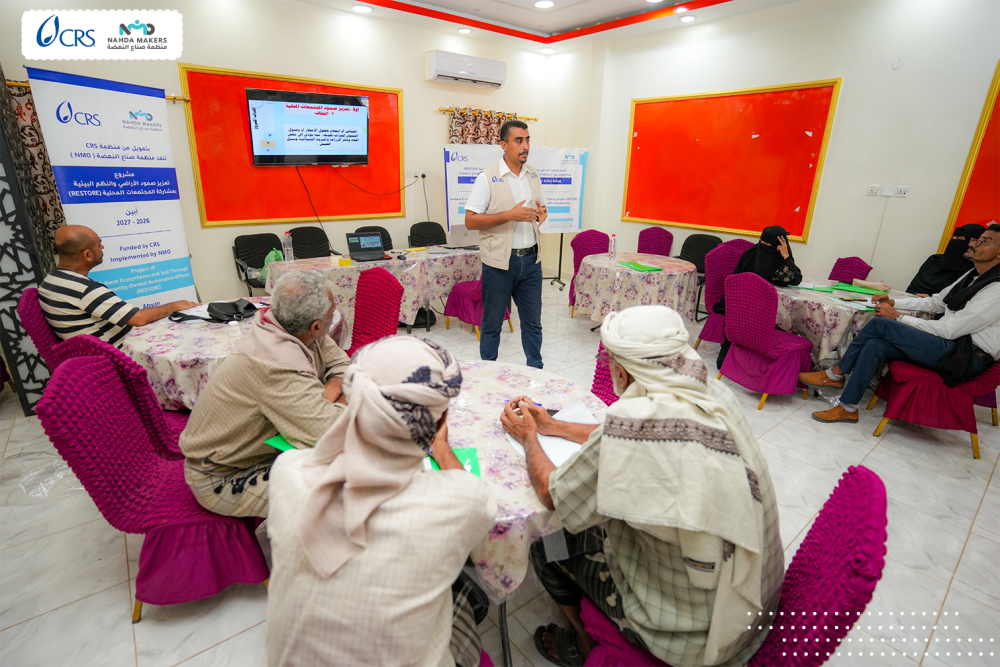
As part of its efforts to strengthen communities’ resilience to climate change and reduce disaster risks, #Nahda_Makers Organization (NMO), with support from #CRS, is implementing the Resilient Ecosystems and Soil Through Community-Owned Restoration Efforts (RESTORE) project in Khanfar District, Abyan Governorate, and Tuban District, Lahj Governorate. The project aims to reduce environmental degradation and flood risks, protect agricultural lands, and enhance local communities’ capacity to adapt to climate change.
As part of the project, #NMO conducted four training workshops. These workshops focused on reactivating and training the Disaster Risk Management Working Group (DRMWG), conducting technical reviews and validation with relevant stakeholders, strengthening community capacities in risk identification and early warning systems for floods and droughts, and developing Community-Led Disaster Risk Management (CLDRM) plans.
The project targets farmers and residents of the targeted areas through sustainable, community-based interventions implemented in coordination with local authorities and the Offices of Agriculture and Irrigation. These efforts aim to protect natural resources and strengthen the resilience of agricultural lands and ecosystems most vulnerable to environmental and climate-related risks.
The project is expected to benefit approximately 750 farmers and community members, both directly and indirectly, through interventions and activities designed to enhance the resilience of agricultural lands and ecosystems in the targeted areas.