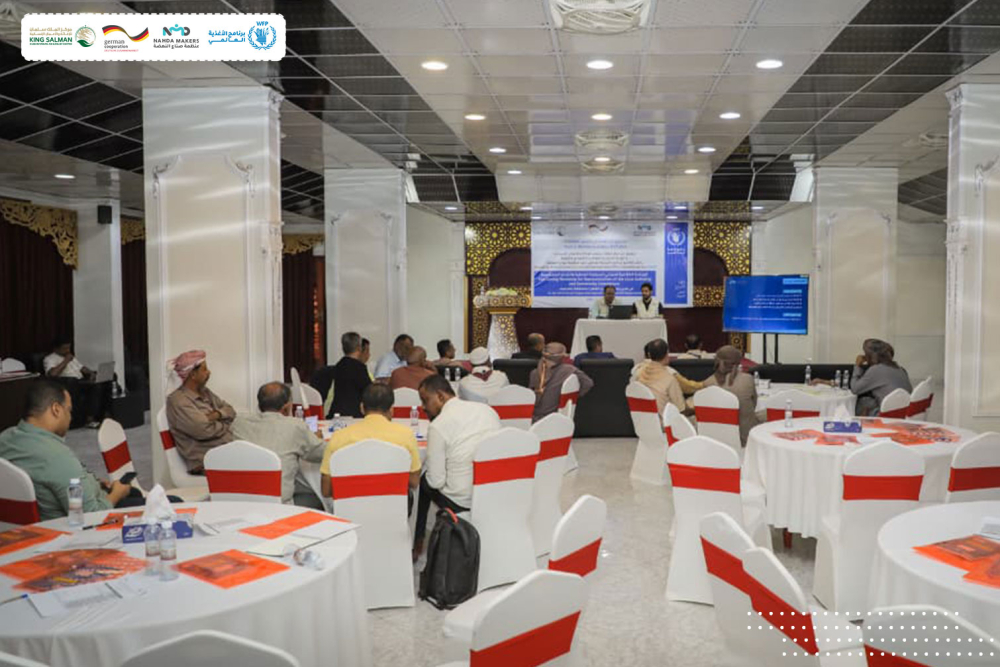
As part of concluding the activities of the Food to Resilience (#FuTuRe3) project, #Nahda_Makers implemented the closing workshop for representatives of local authorities and community committees in the districts of Sayun and Al-Qatn in Hadhramaut Governorate. The project is funded by the King Salman Humanitarian Aid and Relief Center (#KSRelief) and the German Federal Ministry for Economic Cooperation and Development (#BMZ), in partnership with the World Food Programme (#WFP).
The workshop was attended by the Deputy Governor of Hadhramaut for Valley and Desert Affairs, Mr. Jamaan Salmeen Barba’, along with heads of departments from the Agriculture Office, representatives of local authorities in the Valley and Desert and the targeted districts, community committees, representatives from the Water Resources and Environment Authority, and a number of water experts. It also included the consulting entity that carried out the integrated water resources management study in the districts of Tarim and Sah.
The workshop featured visual presentations on the project components, implemented activities, and key achievements during the implementation period, in addition to presenting the results of the Integrated Water Resources Management study. It also included an open discussion session that addressed key lessons learned and highlighted participants’ views and recommendations aimed at improving the quality and effectiveness of future projects.
The workshop aimed to shed light on the overall achievements of the project, discuss the challenges and positive aspects encountered during implementation, and contribute to enhancing future planning based on practical experience and field insights.
The project directly benefited around 300 beneficiaries, through qualitative interventions that included rehabilitating flood protection structures, main and secondary irrigation canals, and water harvesting systems in Wadi Jabhoud in Al-Qatn District, as well as Wadi Bin Tha’lab and Wadi Bin Yamani in Sayun City. These efforts contribute to better utilization of rainwater and floodwater, mitigating the impacts of climate change, and protecting soil from erosion.
This project is part of the Food Assistance for Assets (FFA) programme, implemented over a period of 8 months (from September 2025 to April 2026), with active community participation that reflects the importance of integrating humanitarian and development efforts to achieve sustainability and strengthen community resilience.