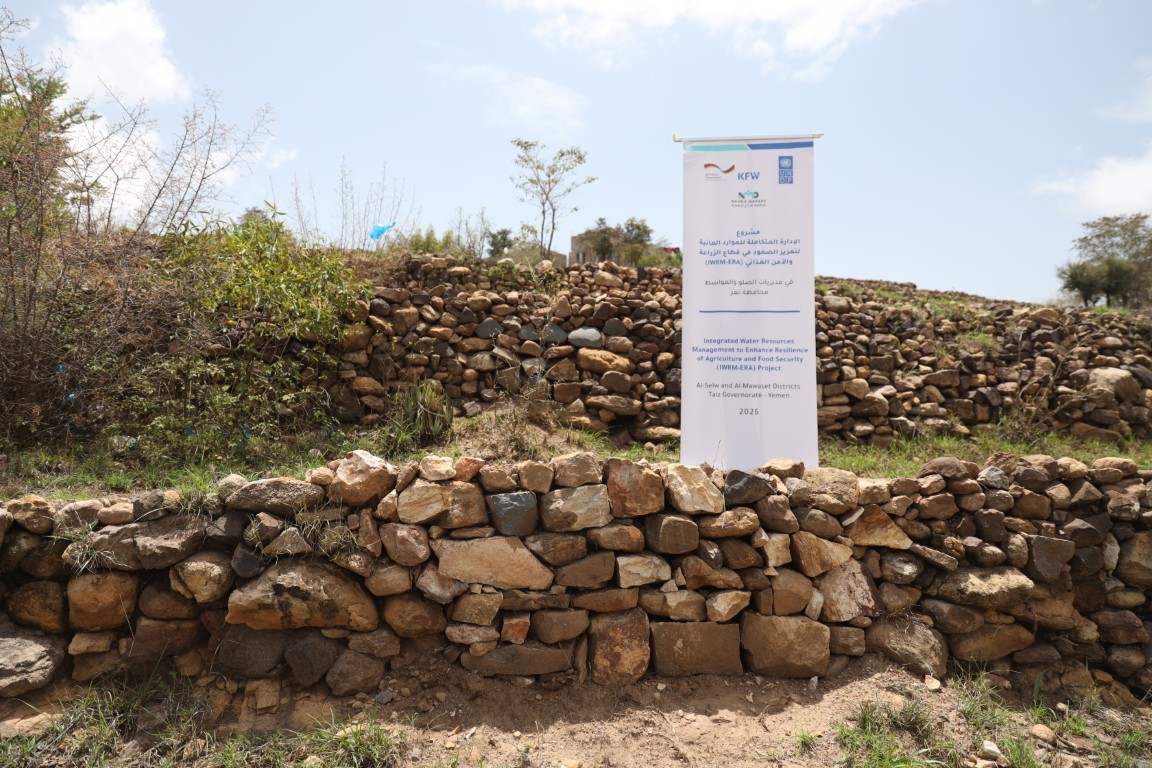
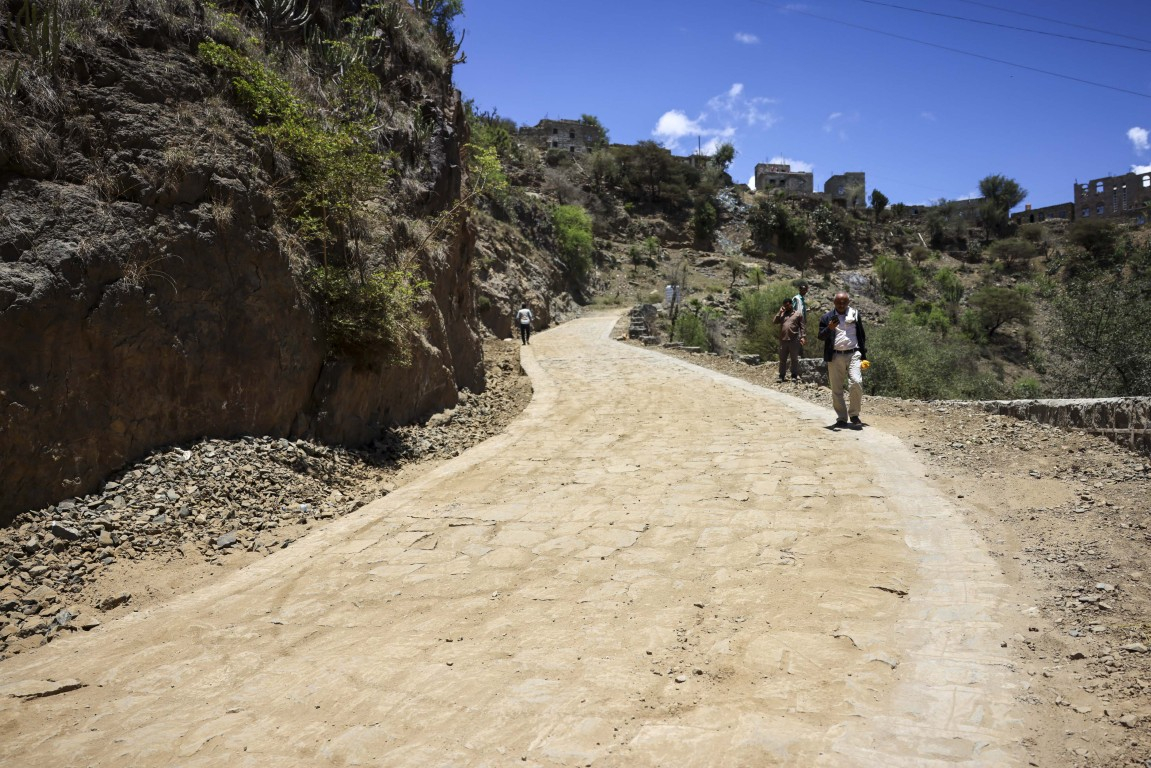
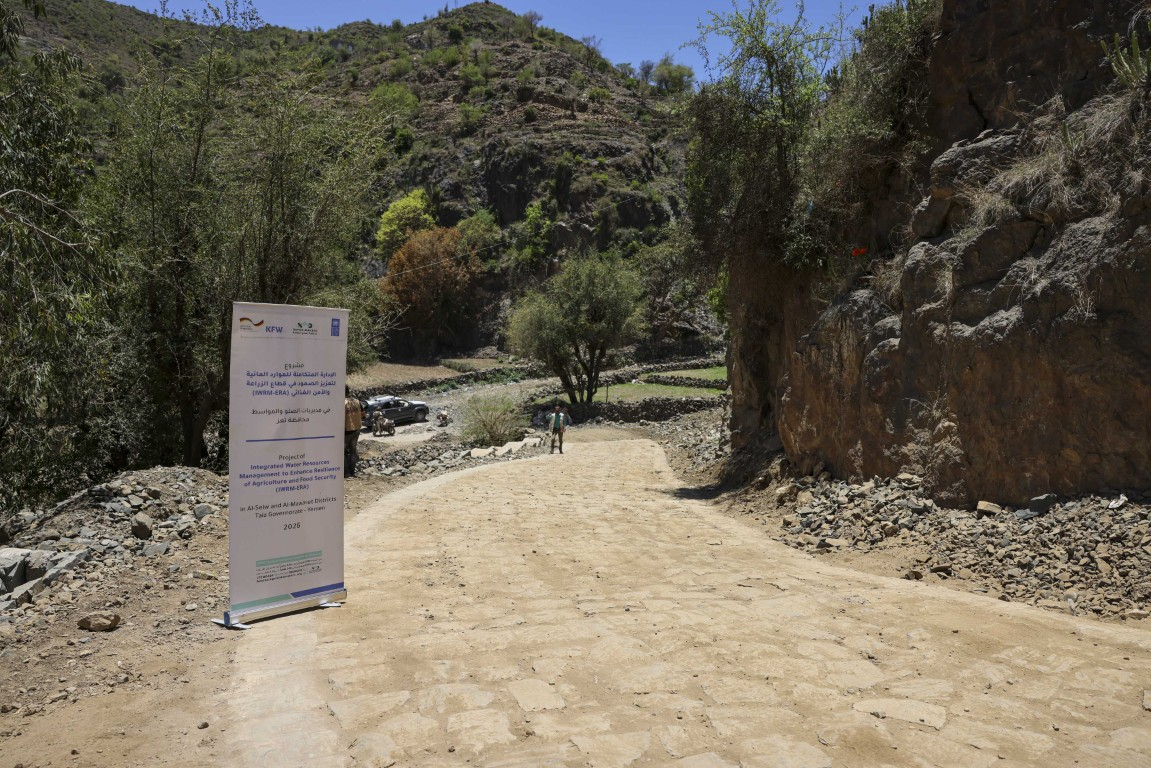
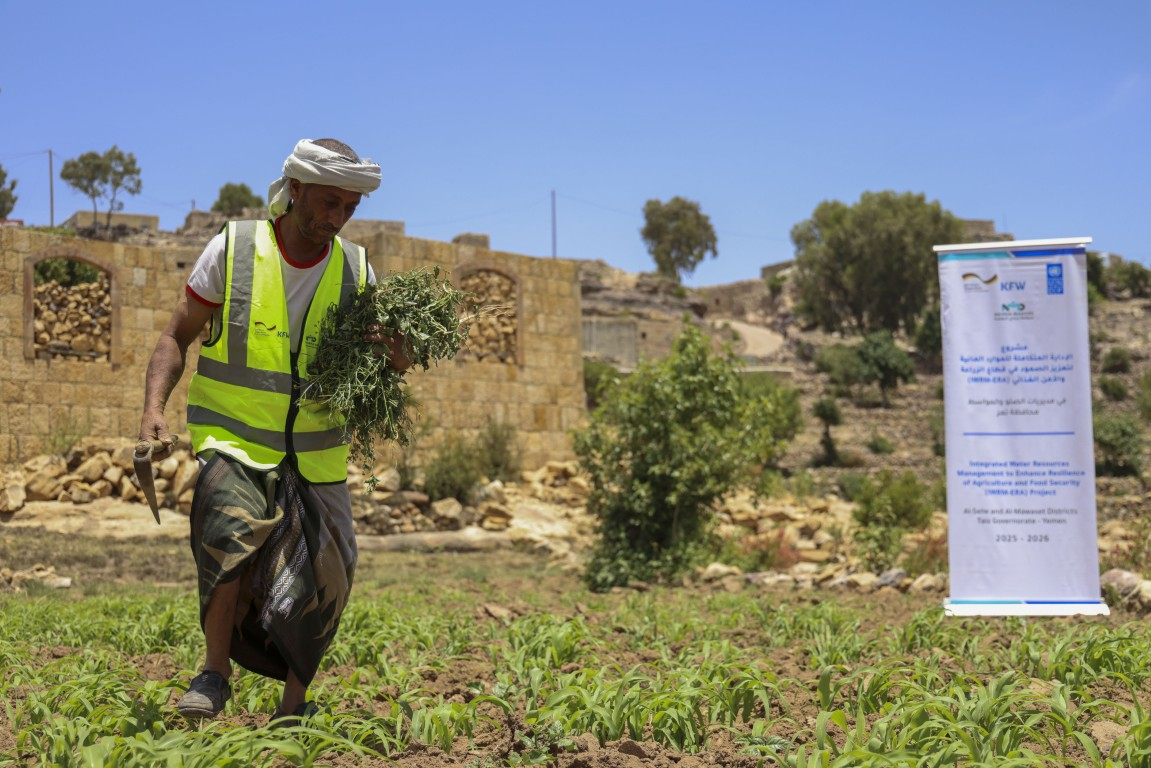
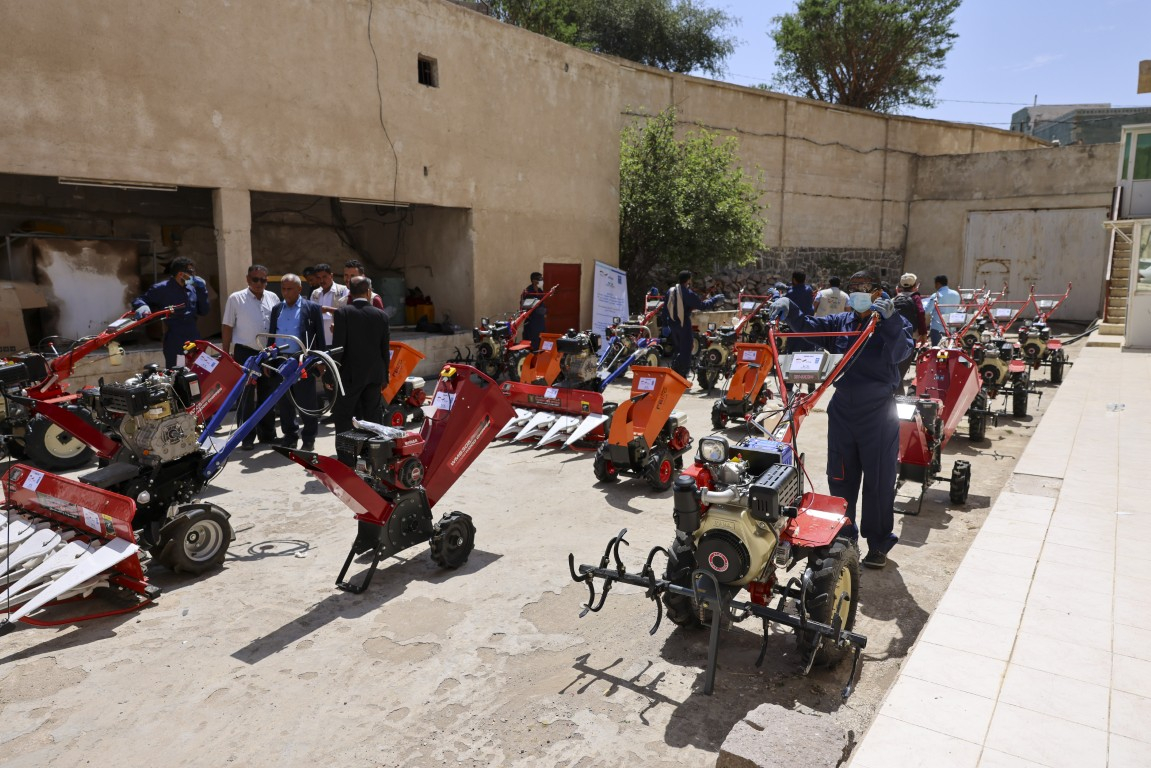
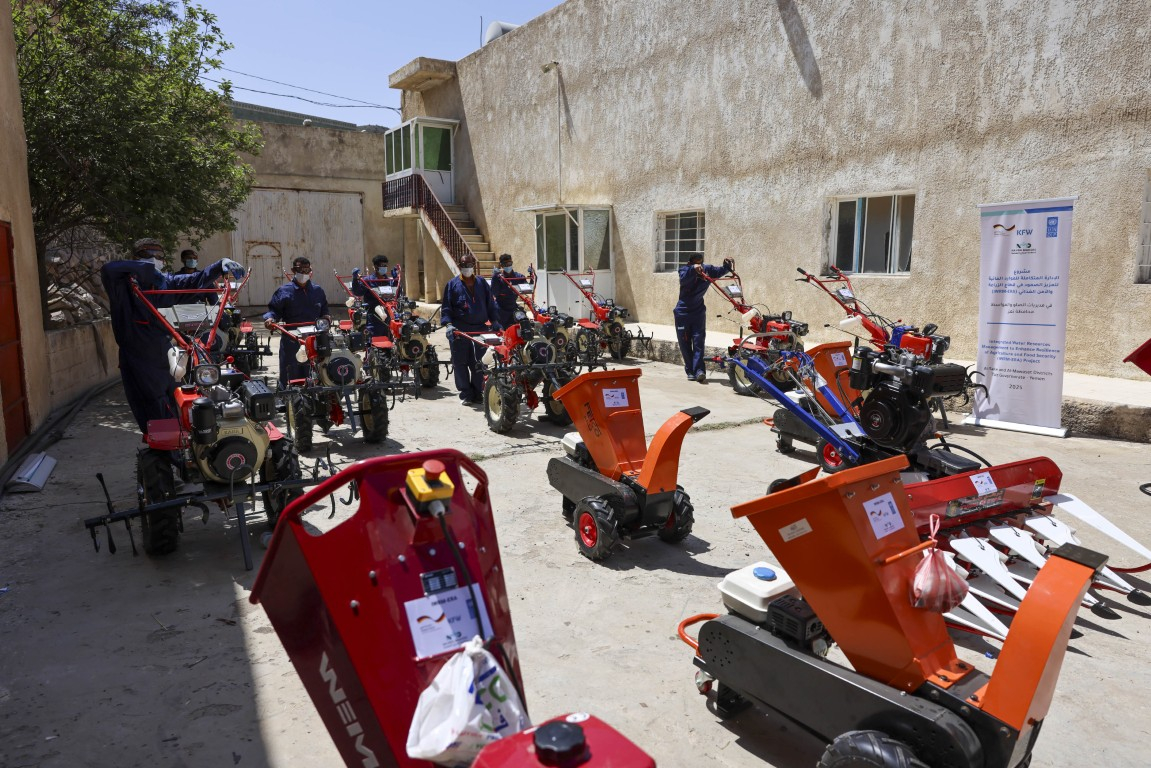
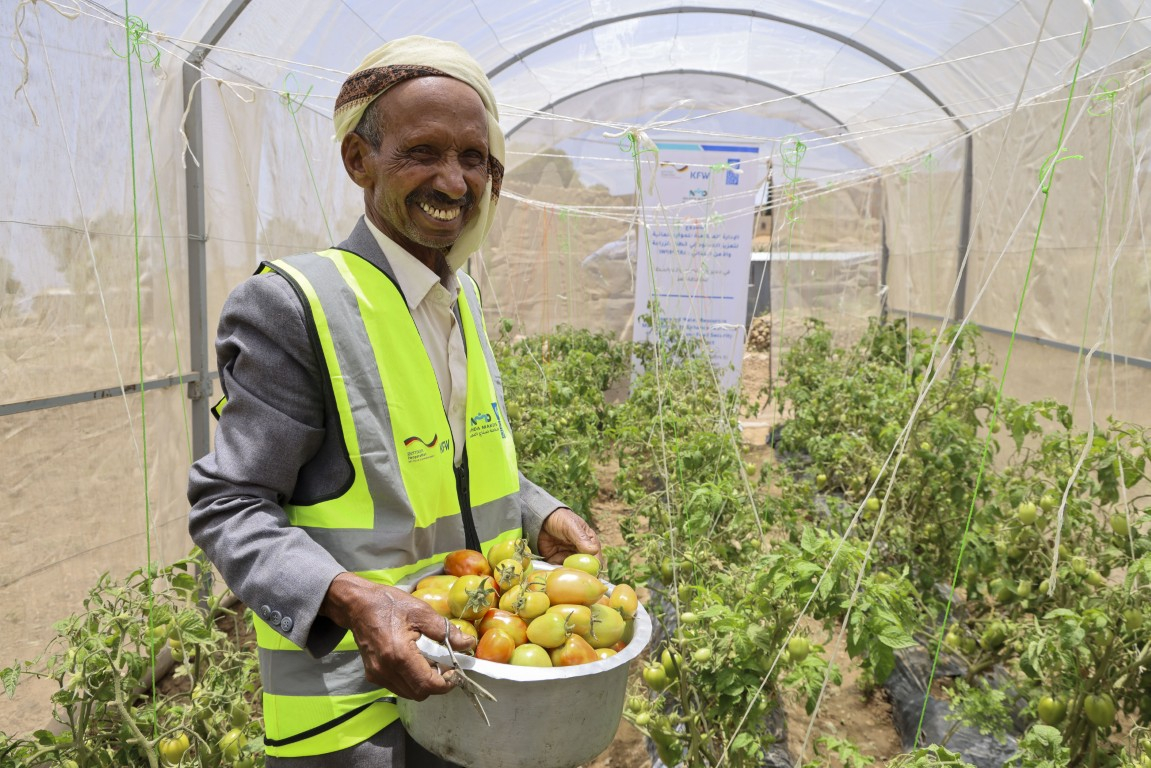
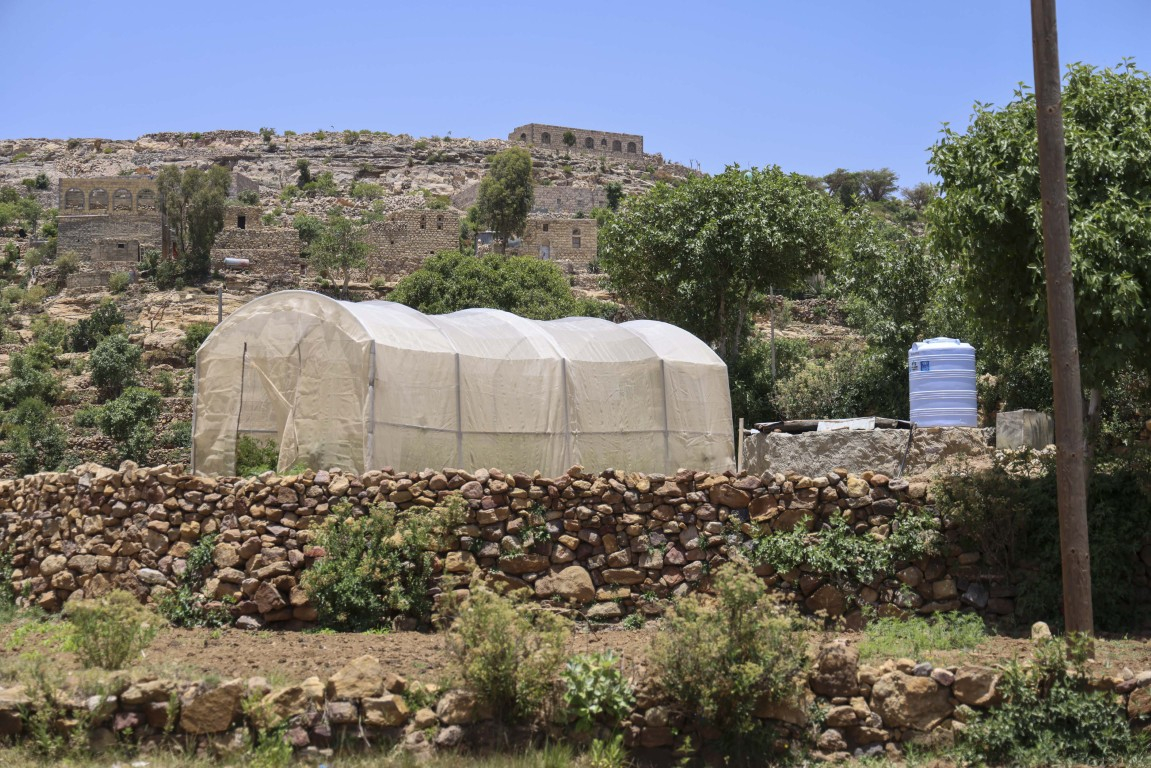
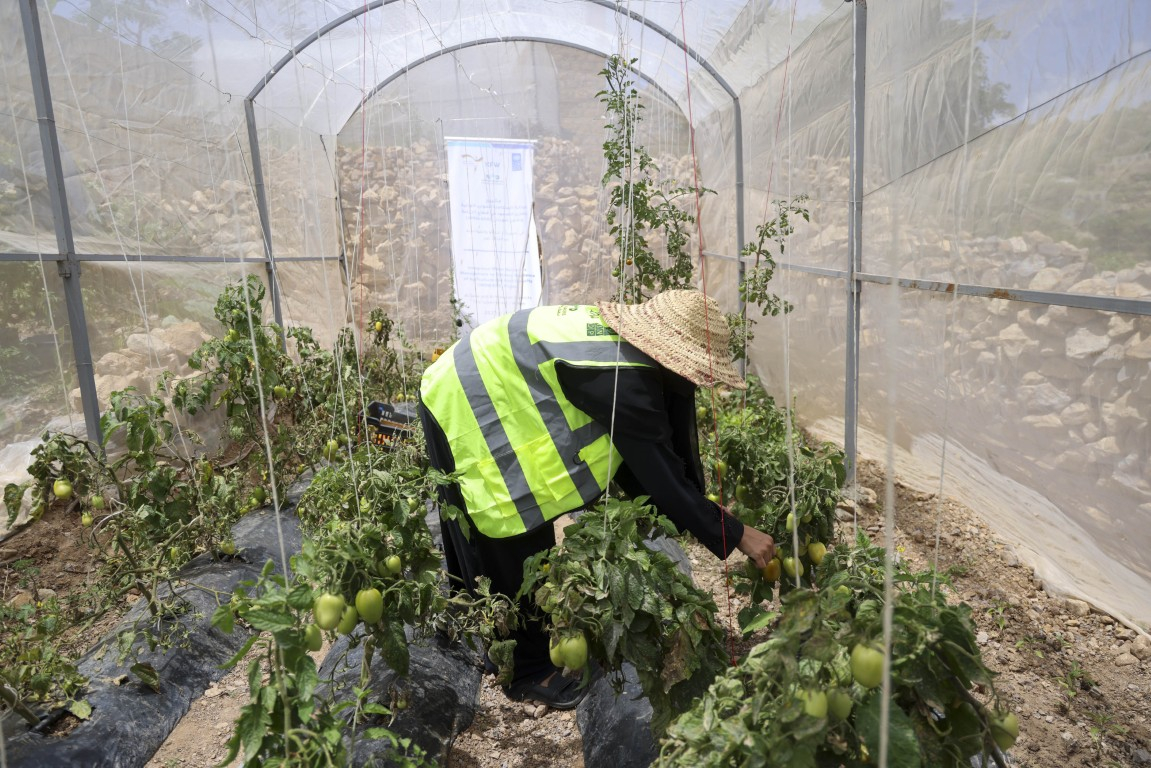
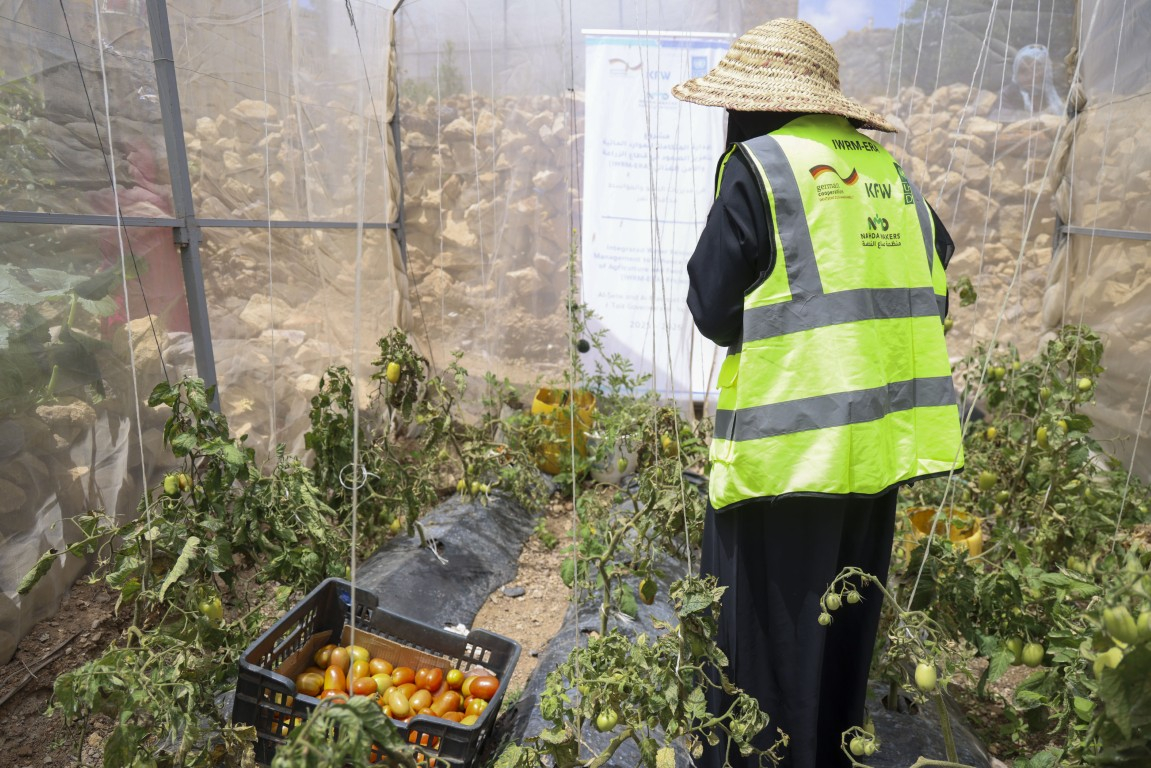
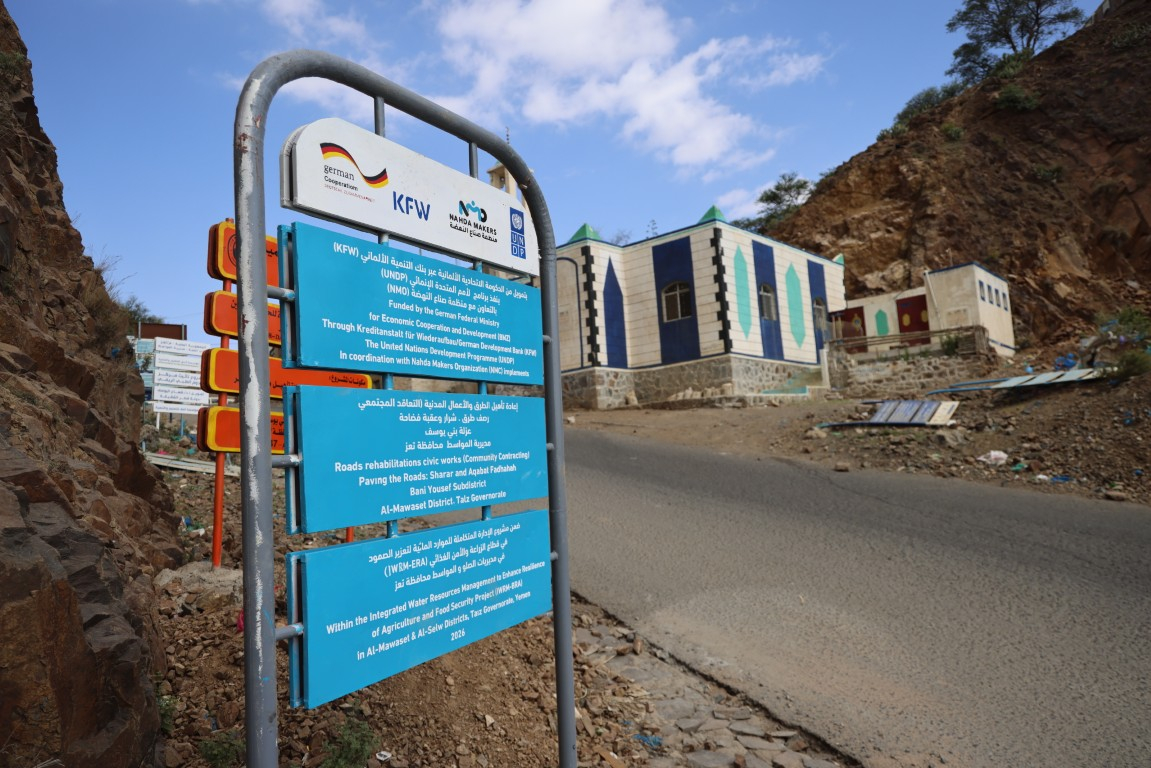
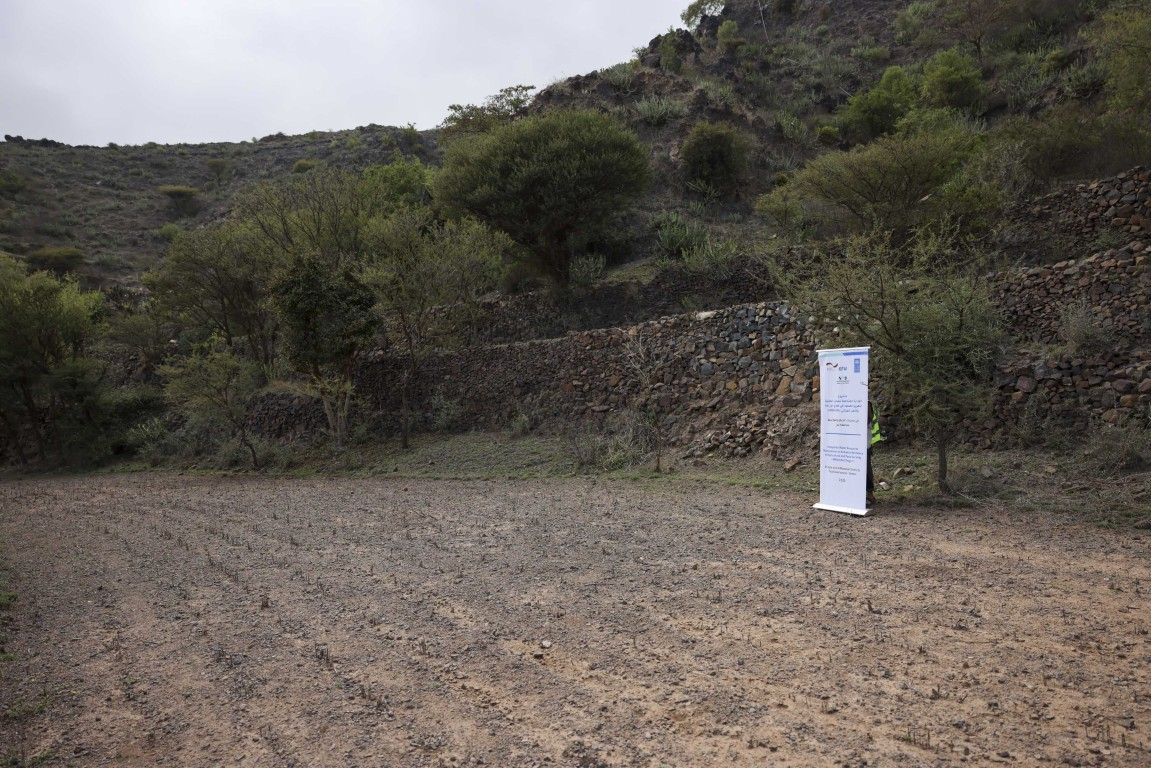
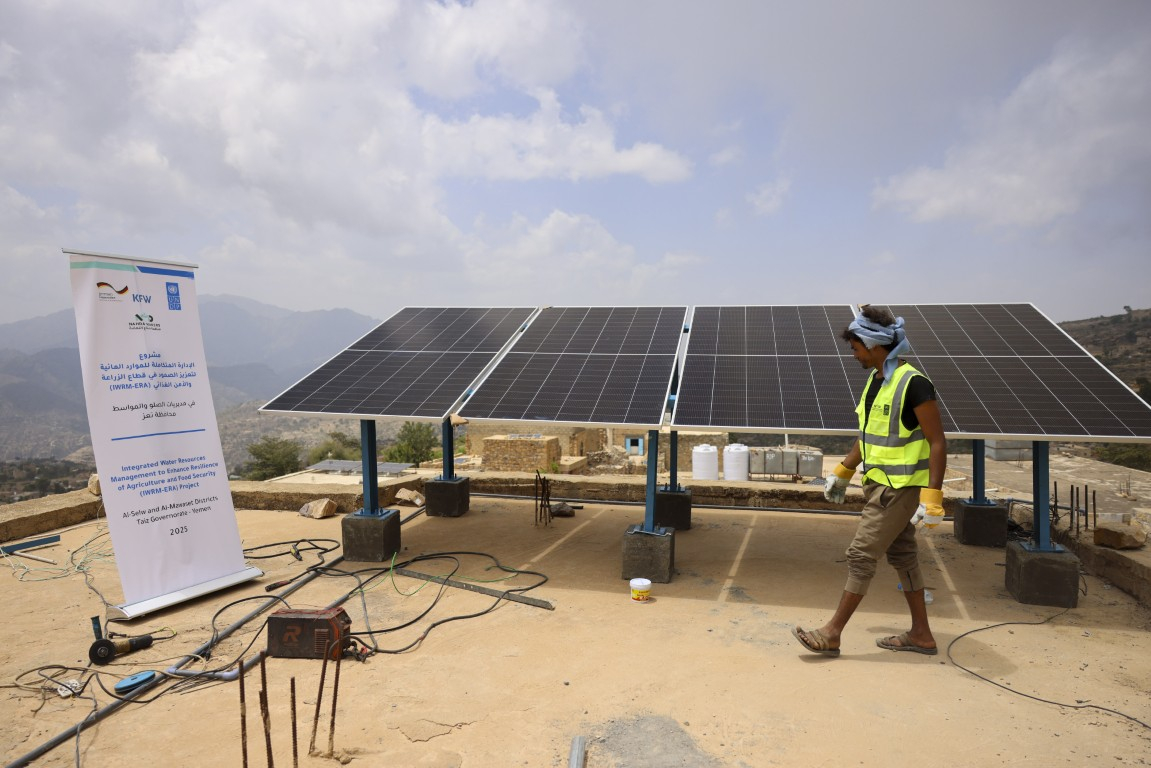
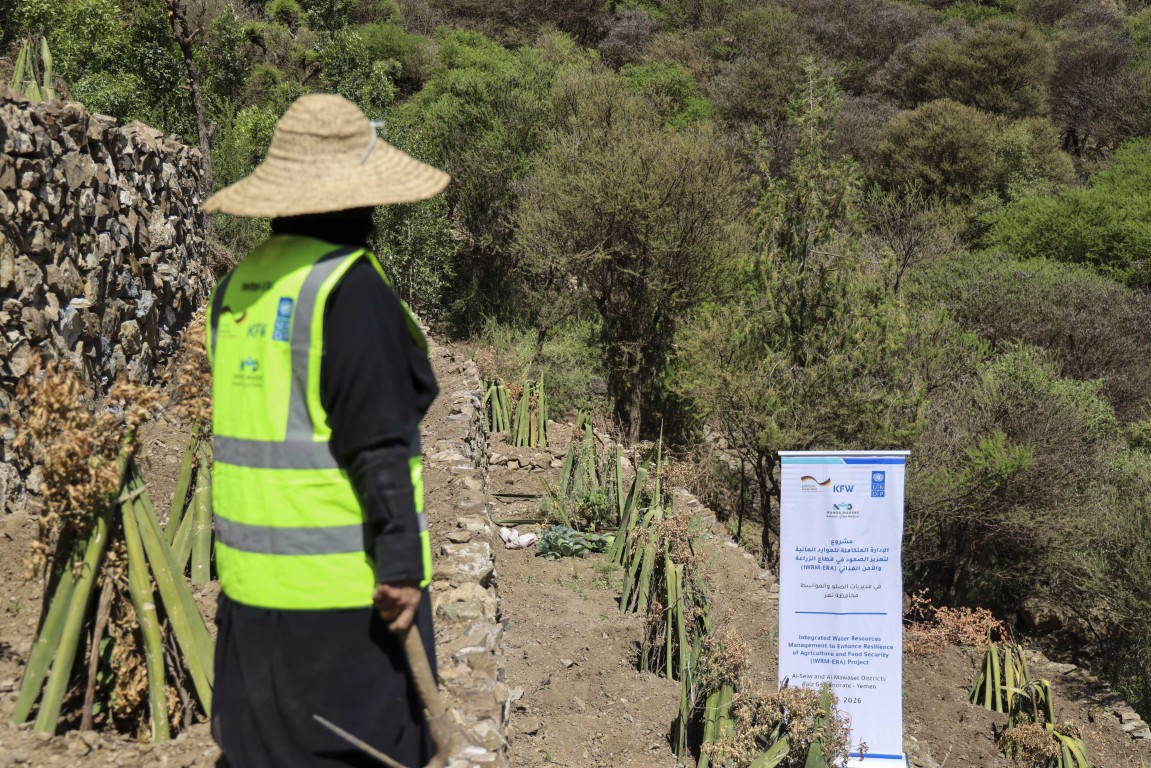
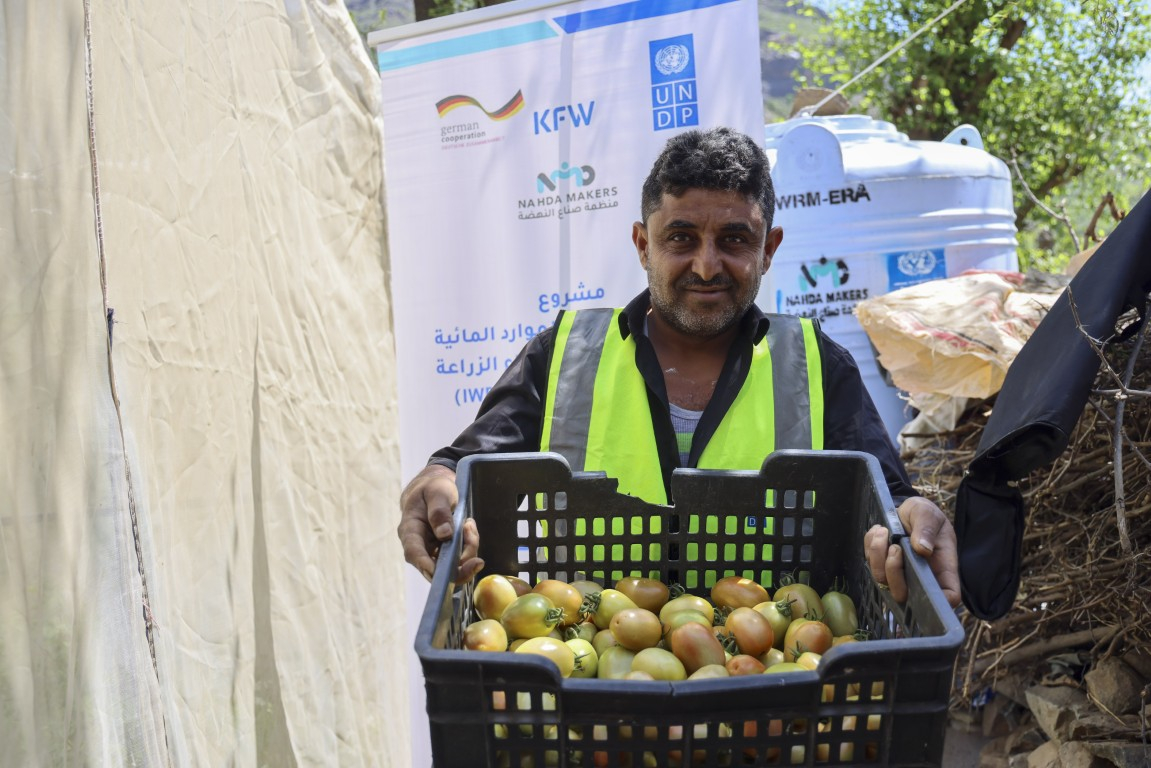
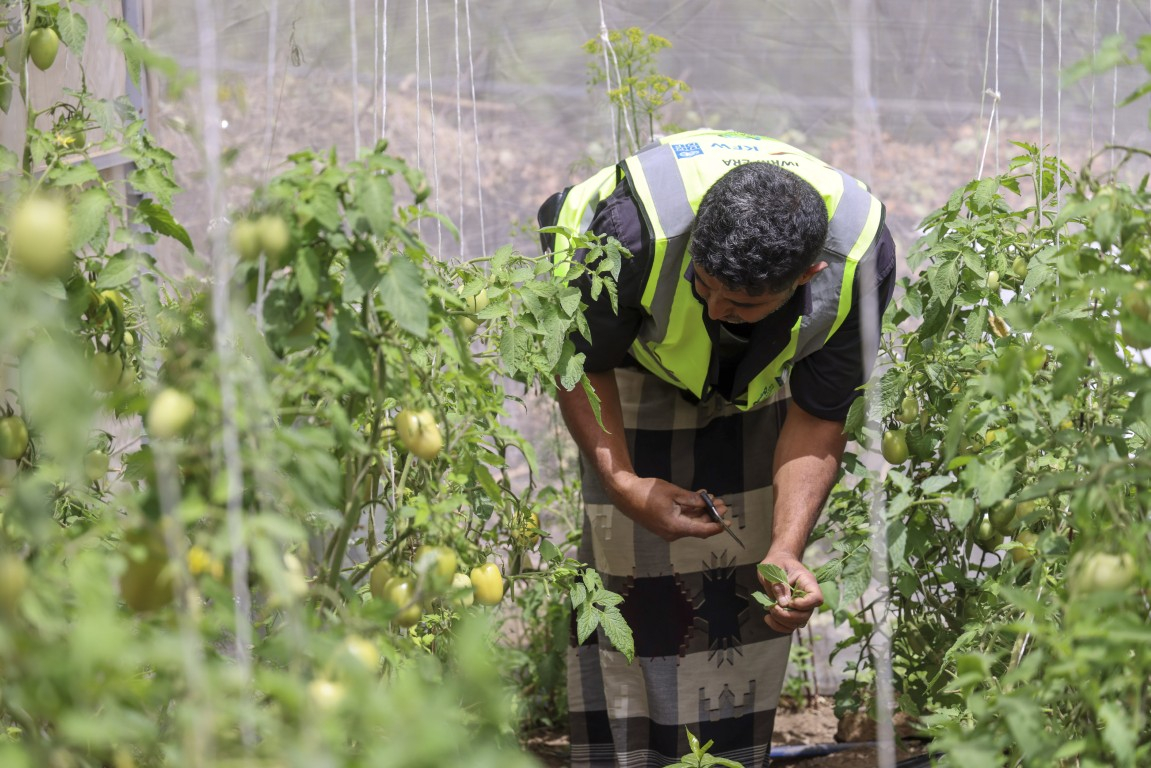
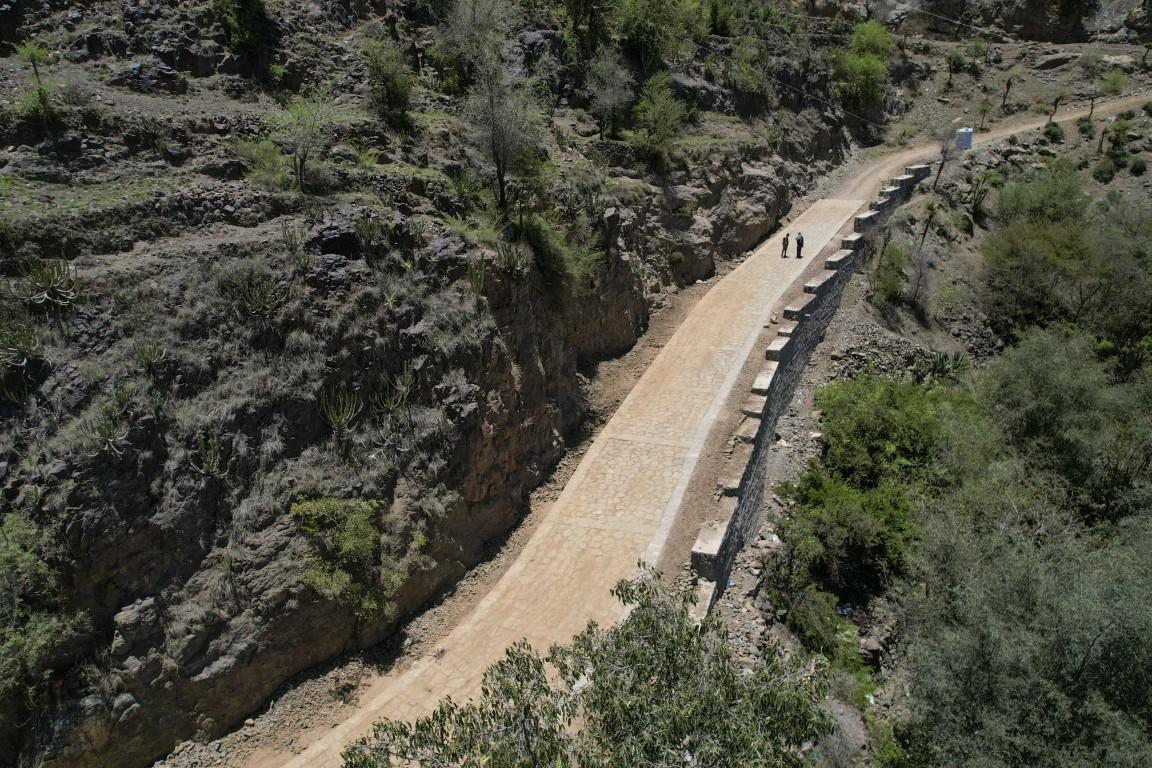
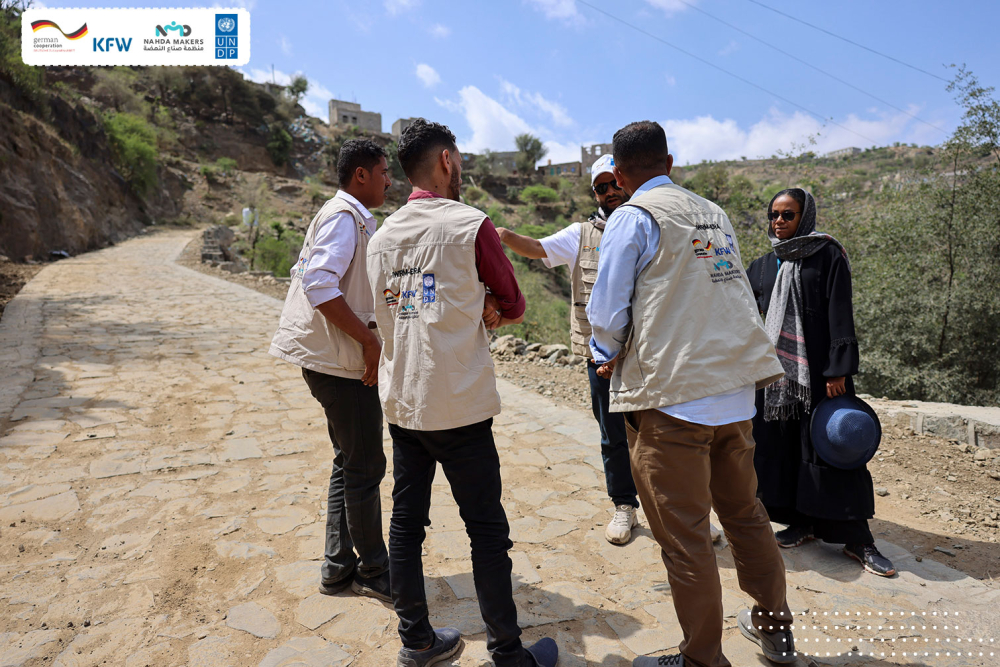
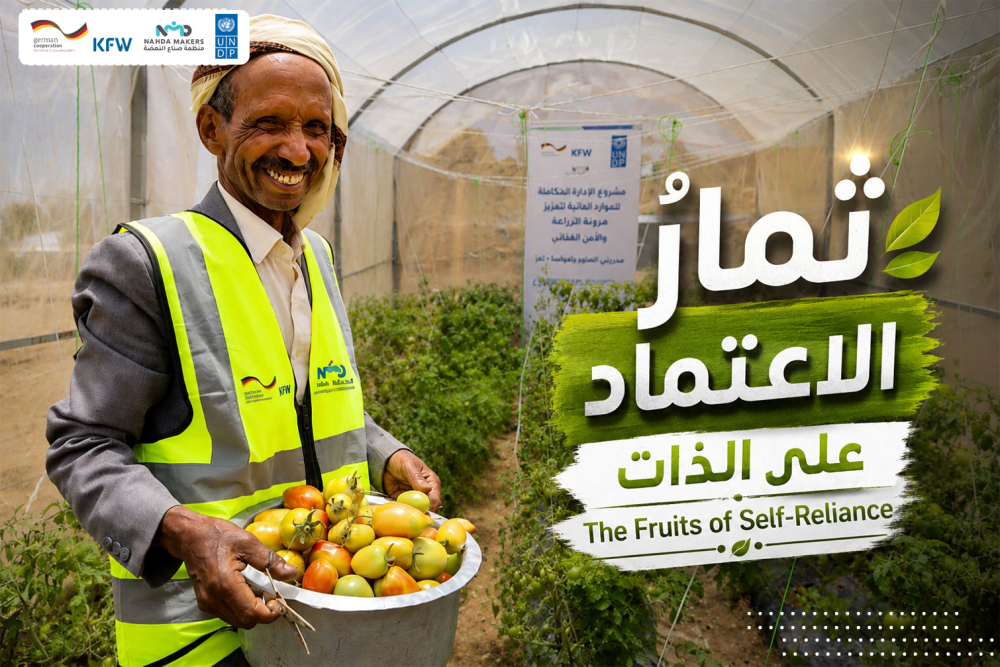
Funded by the German Federal Ministry for Economic Cooperation and Development (BMZ) through the German Development Bank (KfW), the United Nations Development Programme (UNDP) in collaboration with #Nahda_Makers. is implementing the Integrated Water Resources Management for Enhanced Agricultural Resilience and Food Security project.
The overall objective of the project is to strengthen the resilience of poor Yemenis whose livelihoods depend on critical water resources for productive use, enabling them to better withstand poverty and climate-related challenges.
This objective will be achieved through the following components:
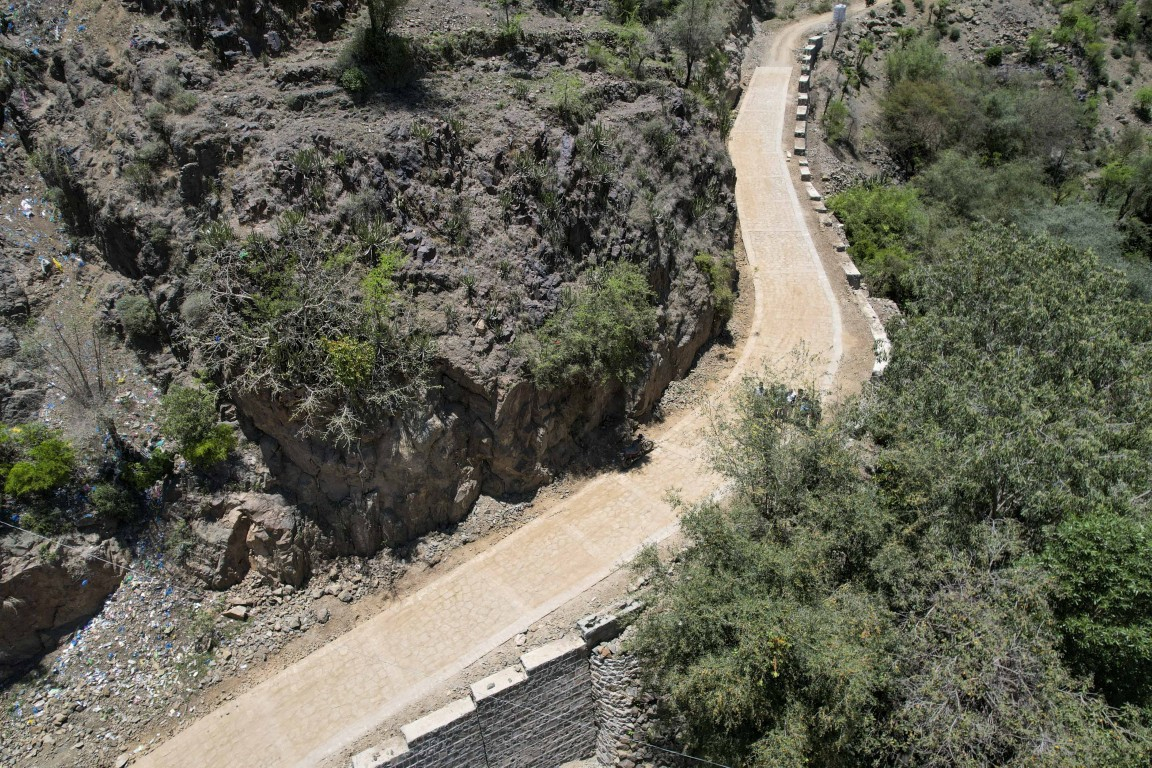
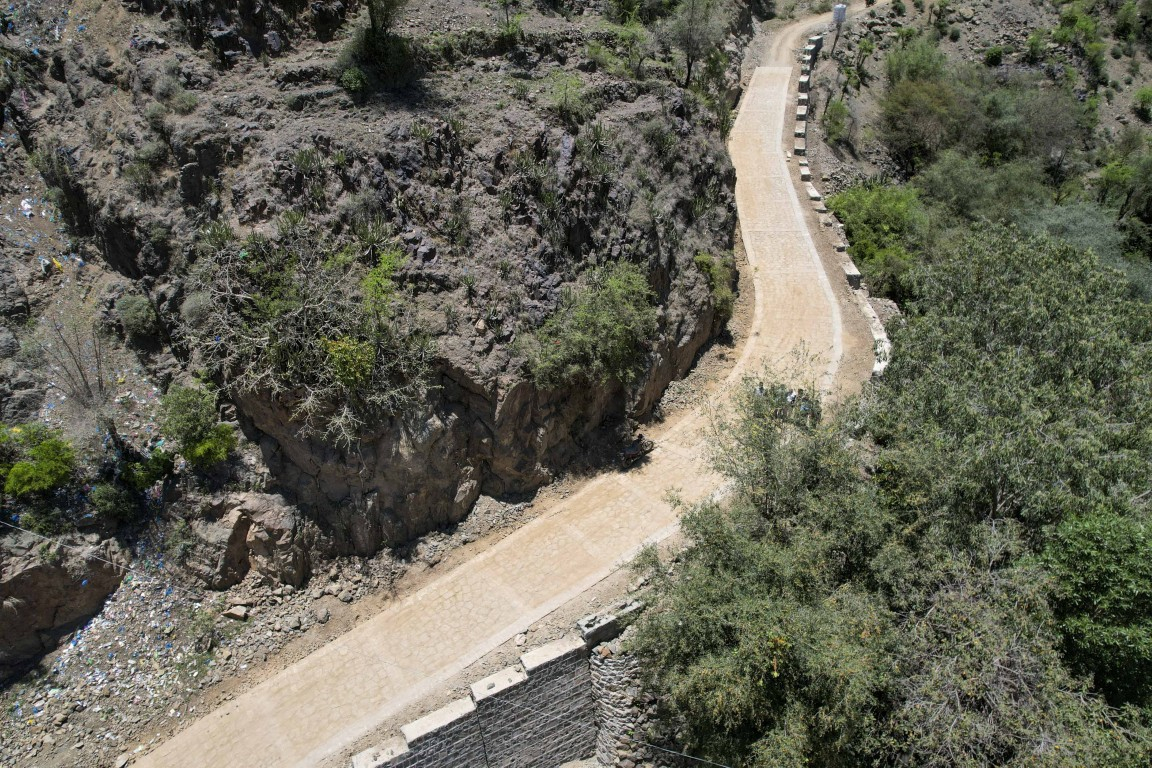
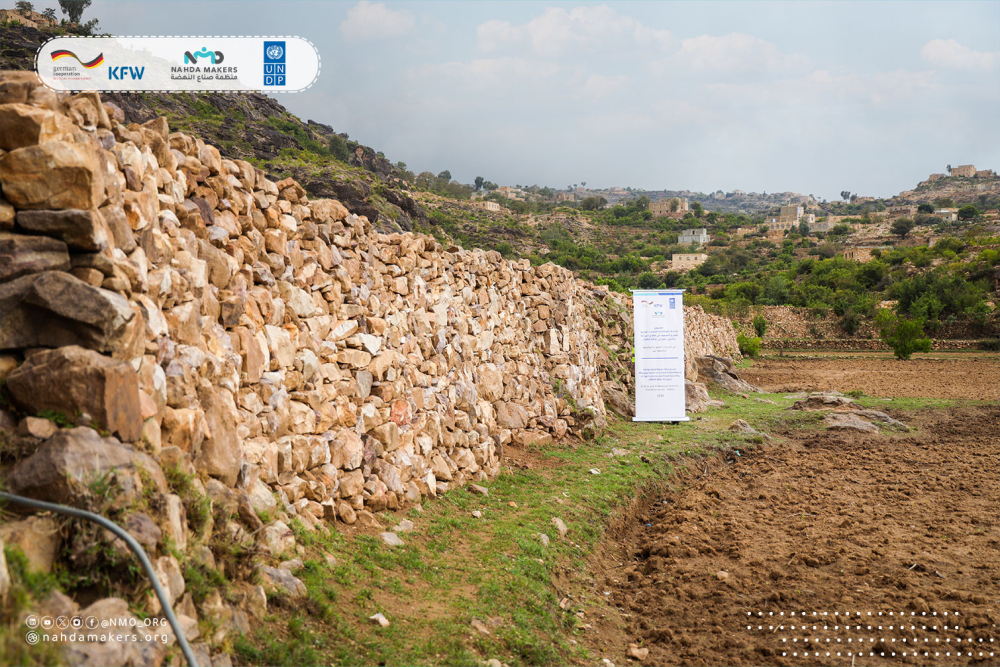
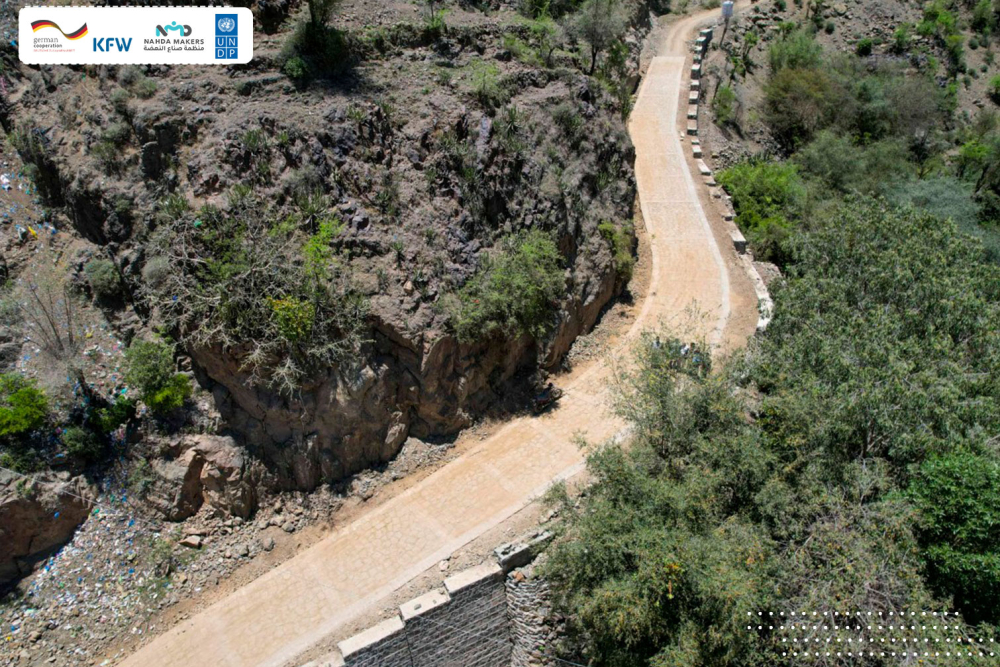
a) Developing and rehabilitating water infrastructure to improve water availability for sustainable agriculture in priority areas within targeted watersheds.
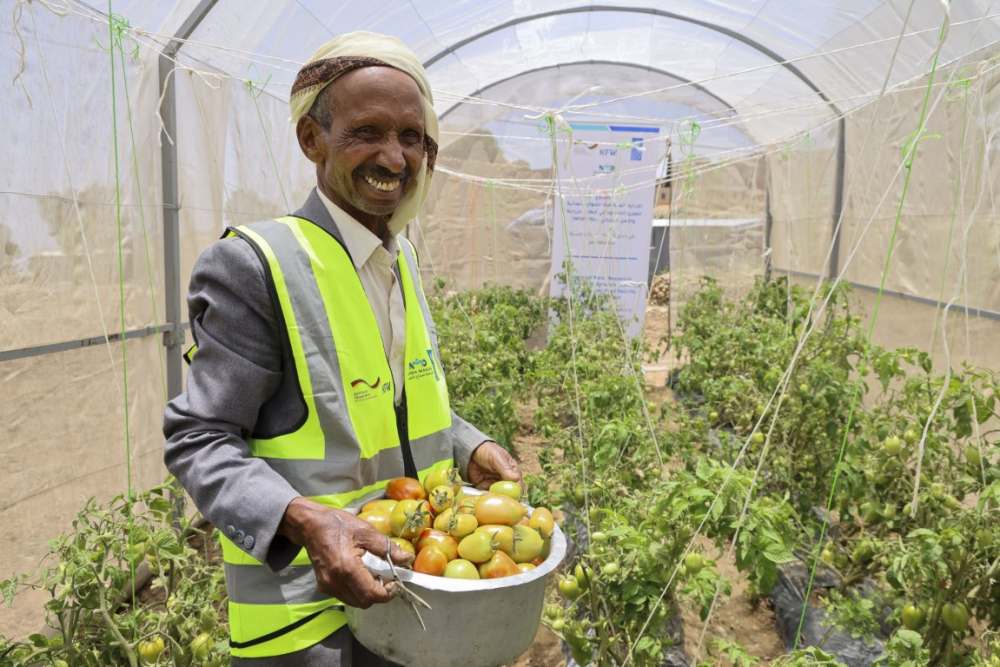
b) Reducing poverty by creating additional income-generating opportunities through the promotion of small-scale value-added agricultural enterprises and improving equitable market access for local communities.
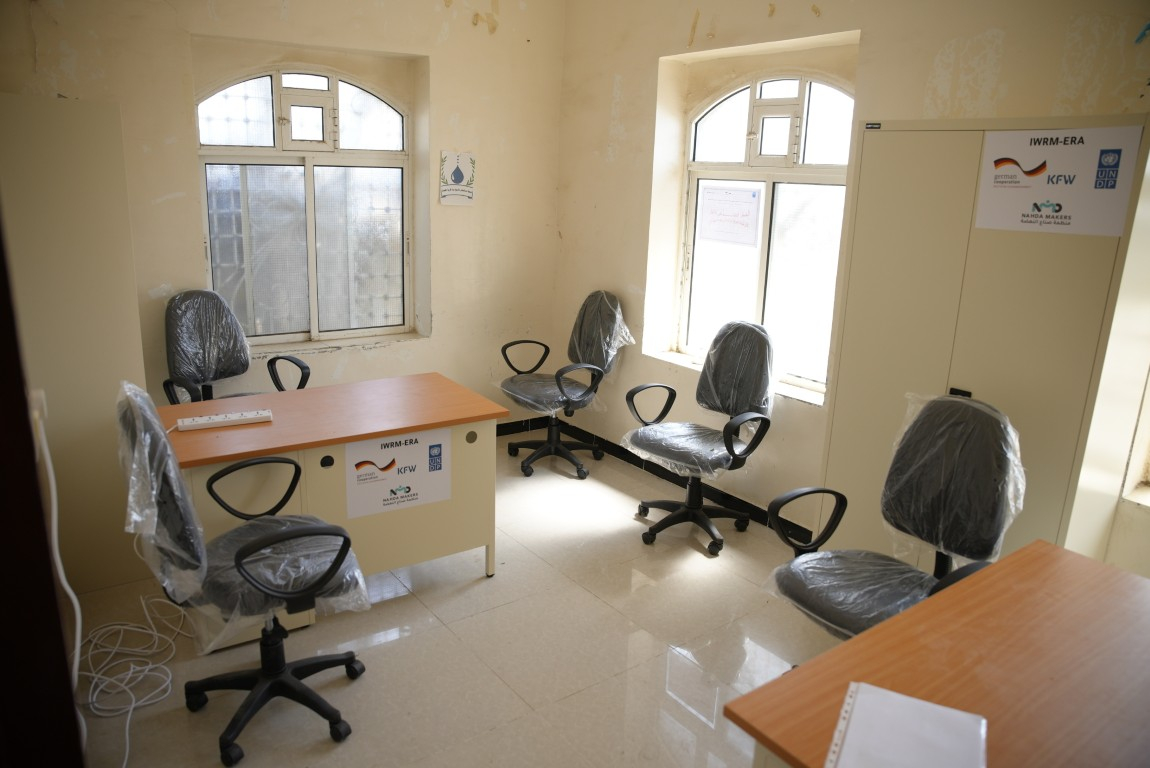
c) Strengthening water governance by enhancing institutions and building the capacities of the National Water Resources Authority (NWRA), Agriculture and Irrigation Offices, Water Users Associations (WUAs), and Water Committees in the targeted areas. This will ensure community ownership, operation and maintenance of water infrastructure, accountability, effective water resources monitoring, and broader participation of women in water resources management.
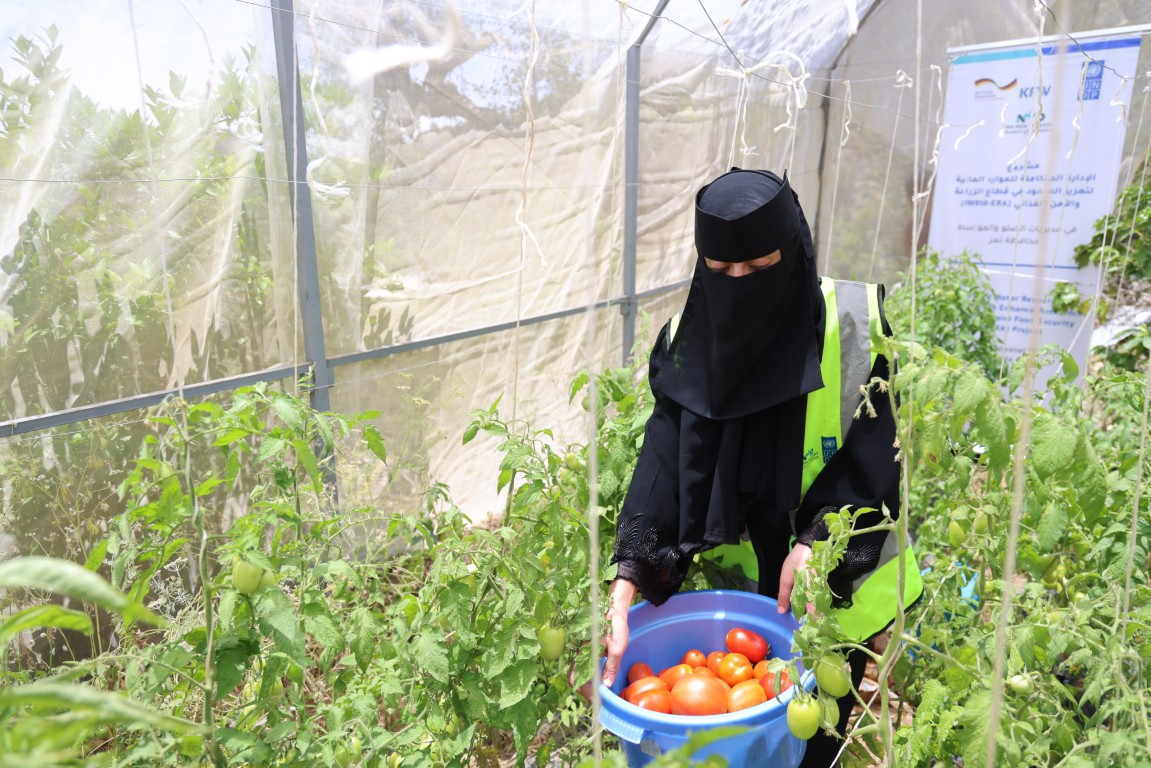
The project targets smallholder farmers, women, and internally displaced persons (IDPs) engaged in agricultural activities.
Expected Outcomes, Outputs and Key Activities
Outcome 1: Enhanced Livelihoods and Increased Agricultural Production
Output 1.1: Increased Water Availability for Agricultural Production
Key Activities:
- Collect data on water resources and existing water infrastructure.
- Assess the hydrological water balance of Tuban and four selected sub-basins, including studies on flood mitigation potential, agricultural terraces, water harvesting, and water allocation.
- Conduct workshops to identify potential water infrastructure intervention projects.
- Assess existing water infrastructure and its utilization.
- Construct, supply, and install water infrastructure works.
Output 1.2: Improved Income through Better Market Access and Enhanced Agricultural Value Chains
Proposed Activities:
- Conduct socio-economic analyses to identify agricultural value-addition opportunities within the selected sub-basins.
- Mobilize local communities, prioritize support for smallholder farmers and women-led household gardens, and strengthen local government planning for small-scale initiatives.
- Implement selected food processing initiatives and provide support to improve market access.
Outcome 2: Improved Water Management through Effective Community Participation in Decision-Making
Output 2.1: Improved Water Governance
Proposed Activities:
- Assess institutional needs and strengthen the capacities of the National Water Resources Authority (NWRA), Water Users Associations (WUAs), and Water Committees.
- Deliver training and capacity-building programs on organizational development and sustainability, equitable resource allocation, water monitoring, compliance with water management regulations, food processing, marketing, and related topics.
- Organize specialized training programs for women focusing on technical and life skills, public speaking, leadership, and women-centered community initiatives.